


AI ethics used to be a values exercise. A set of principles articulated in a document. A commitment to responsible AI on the company website. A team of ethicists asked to review high-profile projects.
In 2026 it is something more specific. And more consequential.
The EU AI Act general application date of August 2, 2026 moved AI ethics from voluntary commitment to enforceable law for high-risk AI systems. Fines for non-compliance reach €35 million or 7% of global annual turnover. The Colorado AI Act took effect June 30, 2026. California's AI transparency requirements are active. Similar frameworks are advancing in the UK, Singapore, Brazil, and Canada.
For enterprises deploying AI in credit decisions, employment, insurance, healthcare, or other high-stakes contexts, AI ethics is now a board-level risk management question. The organisation that treats it as a compliance checkbox is accumulating regulatory exposure. The organisation that builds ethical requirements into its AI architecture from the start is building a competitive advantage.
Here is what AI ethics actually means and what it requires in practice.
What AI Ethics Actually Is
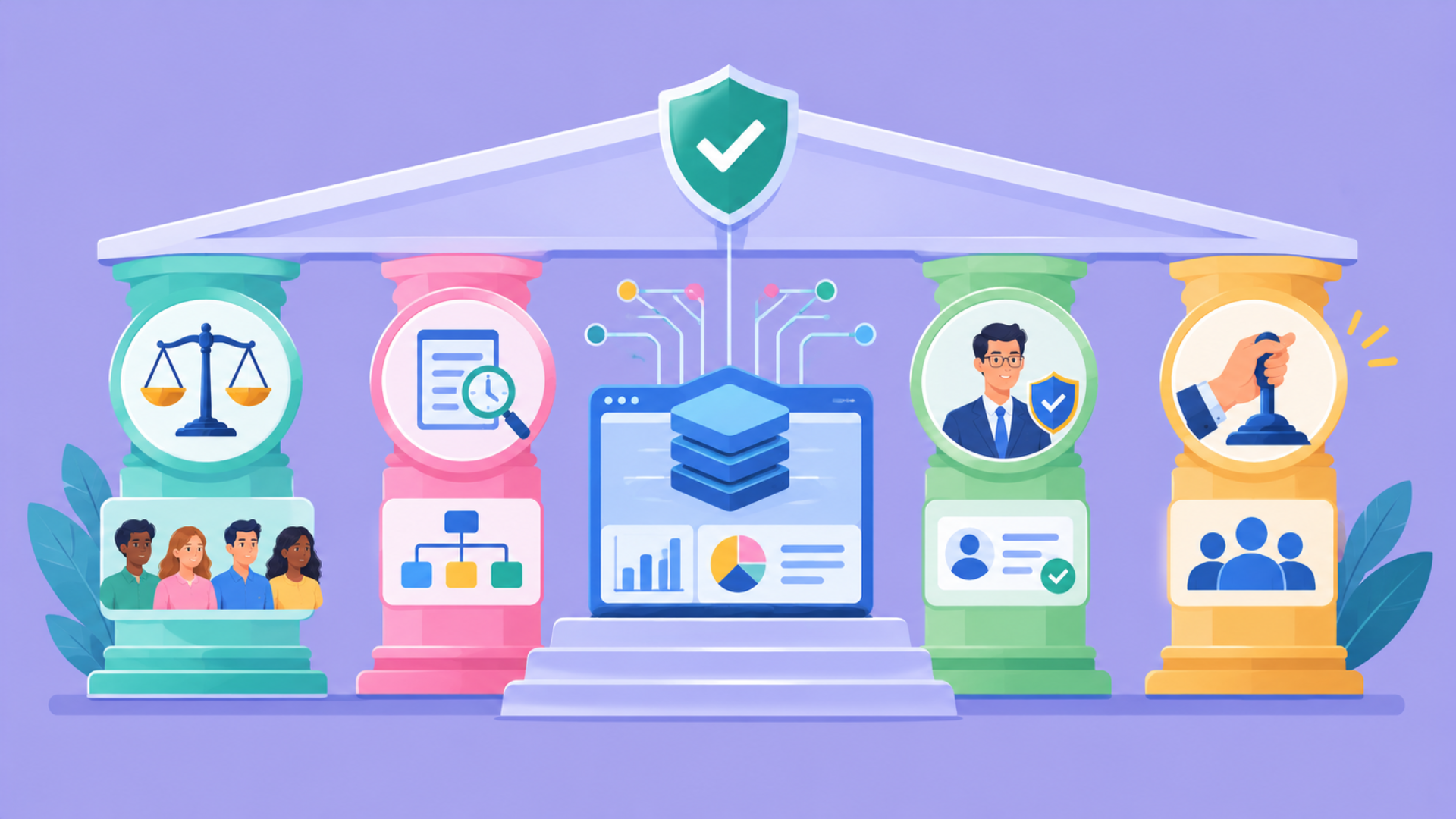
AI ethics is the discipline of ensuring that AI systems are designed, deployed, and governed in a way that is fair, transparent, accountable, and safe.
These four principles are not abstract. Each maps to specific operational requirements.
Fairness means AI systems do not produce systematically different outcomes for different groups of people in ways that are unjustified by the task. A credit model that performs well for one demographic and poorly for another is not fair, regardless of its overall accuracy. A hiring algorithm that screens out candidates from certain educational backgrounds in ways that are not relevant to job performance is not fair.
Fairness in practice means testing AI systems for differential performance across demographic groups before deployment and monitoring that performance continuously in production.
Transparency means affected people and relevant stakeholders can understand what the AI does, how it works, and why it produced a specific output. Transparency does not require exposing the full model architecture to everyone. It requires that the level of explanation is appropriate to the stakes of the decision.
A customer whose credit application was declined has a right to understand the reason. A regulator auditing an insurance pricing system has a right to understand how the model was built and validated. A board approving an AI procurement programme has a right to understand what risks the programme carries.
Accountability means there is a named individual or team responsible for every AI system in production. When something goes wrong, accountability determines who is responsible for fixing it, who explains it to the regulator, and who carries the consequence if it should not have gone wrong.
The most common accountability failure in enterprise AI is not malice. It is ambiguity. Nobody specifically owns the AI system. Nobody has the mandate to monitor it continuously. Nobody is accountable when it starts producing outputs that were not anticipated at deployment.
Human oversight means humans retain meaningful control over AI decisions with significant consequences. The AI advises, recommends, or automates within defined boundaries. Humans retain the authority to override, intervene, and shut down. For high-risk AI systems under the EU AI Act, this is a legal requirement, not a design preference.
Why AI Ethics Is Now an Operational Discipline
The shift from ethics as principles to ethics as operations is the most significant change in enterprise AI governance in 2026.
Principles are static. They describe what the organisation values. They require no specific action and produce no measurable outcome.
Operational ethics requires specific actions that produce specific, measurable outcomes. Bias testing produces bias test results. Audit trails produce audit documentation. Explainability mechanisms produce explanations. Human oversight procedures produce override records. These are evidence that the ethics principles are being implemented, not just stated.
This shift matters because regulators in 2026 are asking for evidence, not principles. An EU AI Act conformity assessment for a high-risk AI system asks for a documented risk management system. Automatic logs of the AI system's operation. Results of bias and accuracy testing. Evidence of human oversight mechanisms. Evidence of post-market monitoring.
A company with an AI ethics document but no operational evidence of implementation will not pass a conformity assessment. A company with documented processes, test results, audit trails, and monitoring records will.
The organisations that are ahead are treating ethical AI as an engineering discipline rather than a policy discipline. The ethics requirements are baked into the architecture, not added as a review layer on top of it.
The Six Requirements That Most Enterprises Have Not Yet Met
The EU Ethics Guidelines for Trustworthy AI names seven requirements for ethical AI. Most enterprise AI programmes have addressed some of these. Few have addressed all of them operationally.
Human agency and oversight:
AI systems should support human oversight and not undermine the ability of humans to intervene. For agentic AI in 2026, this means defining specific human oversight thresholds before deployment. What decisions can the AI make autonomously? What requires human approval? What triggers automatic escalation? These need to be documented and technically enforced, not just described in a policy.
Technical robustness and safety:
AI systems should be reliable, reproducible, and resistant to errors or adversarial inputs. This means testing AI systems under the edge cases and adversarial conditions they will encounter in production. It means monitoring for performance degradation continuously. It means having incident response procedures for when AI systems fail unexpectedly.
Privacy and data governance:
AI systems should minimise data collection, protect personal data, and comply with privacy regulations. In practice this means conducting data protection impact assessments before deploying AI on personal data, implementing data minimisation principles in the training and inference data pipeline, and ensuring that AI systems do not inadvertently expose personal data through their outputs.
Transparency:
AI systems should be understandable to those they affect. This requires explainability mechanisms appropriate to the stakes of each decision, disclosure of AI usage to affected individuals where required, and audit trails that document what the AI did and why.
Diversity, non-discrimination, and fairness:
AI systems should not produce unjustified differential outcomes for different groups. This requires bias testing across demographic groups before deployment, ongoing monitoring for differential performance in production, and procedures for addressing bias that is discovered post-deployment.
Societal and environmental wellbeing:
AI systems should consider broader societal and environmental impacts. For most enterprise AI, this means assessing the operational carbon footprint of large AI deployments and ensuring that AI systems do not produce outputs that could harm communities or groups beyond the immediate users.
Accountability:
Every AI system should have a named owner responsible for its behaviour. This requires a model registry that documents ownership, a governance structure that assigns accountability, and clear procedures for who does what when an AI system produces harmful or unexpected outputs.
What Practical AI Ethics Implementation Looks Like
The enterprises that have moved from principles to operational ethics have implemented a consistent set of mechanisms.
A cross-functional AI ethics committee or governance body:
Not the AI team reviewing its own work. A cross-functional body with representation from legal, compliance, ethics, risk, data science, and relevant business units. Its mandate is to define ethical standards, review high-risk deployments before they go live, and resolve AI-related ethical and policy issues.
An AI risk classification system:
Before any AI system is built or procured, it is classified by risk level. High-risk systems get more scrutiny, more documentation, and more oversight. Low-risk systems have lighter governance requirements. The classification maps to the EU AI Act risk tiers and to internal exposure thresholds.
Pre-deployment ethics review for high-risk systems:
A structured review process that checks bias testing results, explainability mechanisms, human oversight procedures, and compliance documentation before a high-risk AI system goes live. Not a checkbox. A review with the authority to delay or block deployment.
Continuous monitoring in production:
Ethics obligations do not end at deployment. They continue throughout the system's operational life. Bias monitoring, performance monitoring, and compliance monitoring need to run continuously. This is what the EU AI Act means by post-market monitoring and what the NIST AI RMF means by govern and measure.
An AI incident response process:
When an AI system produces harmful, biassed, or unexpected outputs, there needs to be a defined process for identifying the issue, containing the harm, notifying affected parties where required, remediating the system, and documenting what happened and what was done about it.
The Business Case for Ethical AI Beyond Compliance
The compliance case for AI ethics is straightforward. The fines are large. The reputational consequences of publicised AI failures are significant. The regulatory trajectory is toward more enforcement, not less.
The business case beyond compliance is also real. Customers, employees, and partners increasingly make decisions based on whether they trust an organisation's AI. 80% of consumers say the experience a company provides is as important as its products or services. An AI experience that is unexplained, unfair, or opaque erodes that trust faster than most other service failures.
Enterprises with advanced AI governance are starting to use it as a commercial differentiator. Procurement teams at large organisations are asking for AI governance evidence from vendors and partners. Being able to demonstrate ethical AI practice is becoming a sales asset, not just a compliance requirement.
Companies with advanced loyalty programmes, advanced AI governance, and advanced data practices are growing faster than competitors. The pattern is consistent. Treating AI ethics as infrastructure rather than overhead produces better outcomes over time.
Vishleshan AI's forward deployed engineering (FDE) approach builds AI systems with ethical requirements designed in from the architecture stage. Bias testing, audit trails, human oversight thresholds, and explainability mechanisms are components of every production deployment, not additions made before a compliance review. This approach applies across financial services, automotive manufacturing, and other sectors where the regulatory and commercial stakes of getting AI ethics right are highest. Book a Consultation