


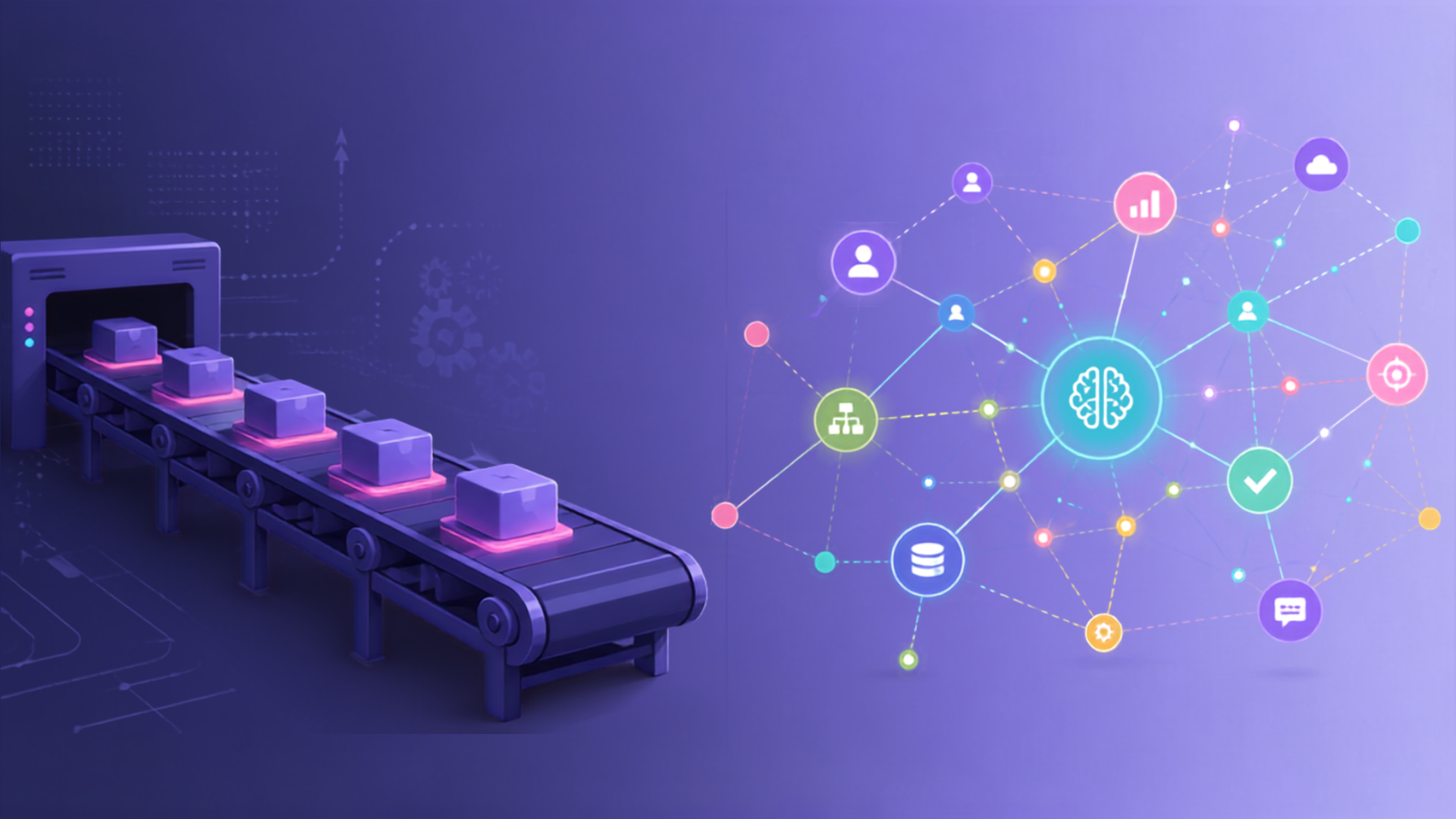
Traditional automation and agentic AI are both described as ways to get work done without a human doing it manually. That similarity in description covers a fundamental difference in how each one actually works, and what it can and cannot do inside a real enterprise environment.
The distinction matters because enterprises investing in AI in 2026 are frequently making decisions based on a blurred understanding of the two. The result is either underinvestment, because the capability of agentic AI is being compared unfavourably to automation that costs less and feels more predictable, or misapplication, because agentic AI is being deployed into situations where straightforward automation would have served better and cost less.
This piece draws the line clearly.
The Core Difference in One Sentence
Traditional automation executes a sequence of steps you defined in advance. Agentic AI reasons through a situation and decides what steps to take.
That distinction sounds modest. It is not. It changes what the system can handle, what breaks it, and where the value comes from.
What Traditional Automation Actually Is
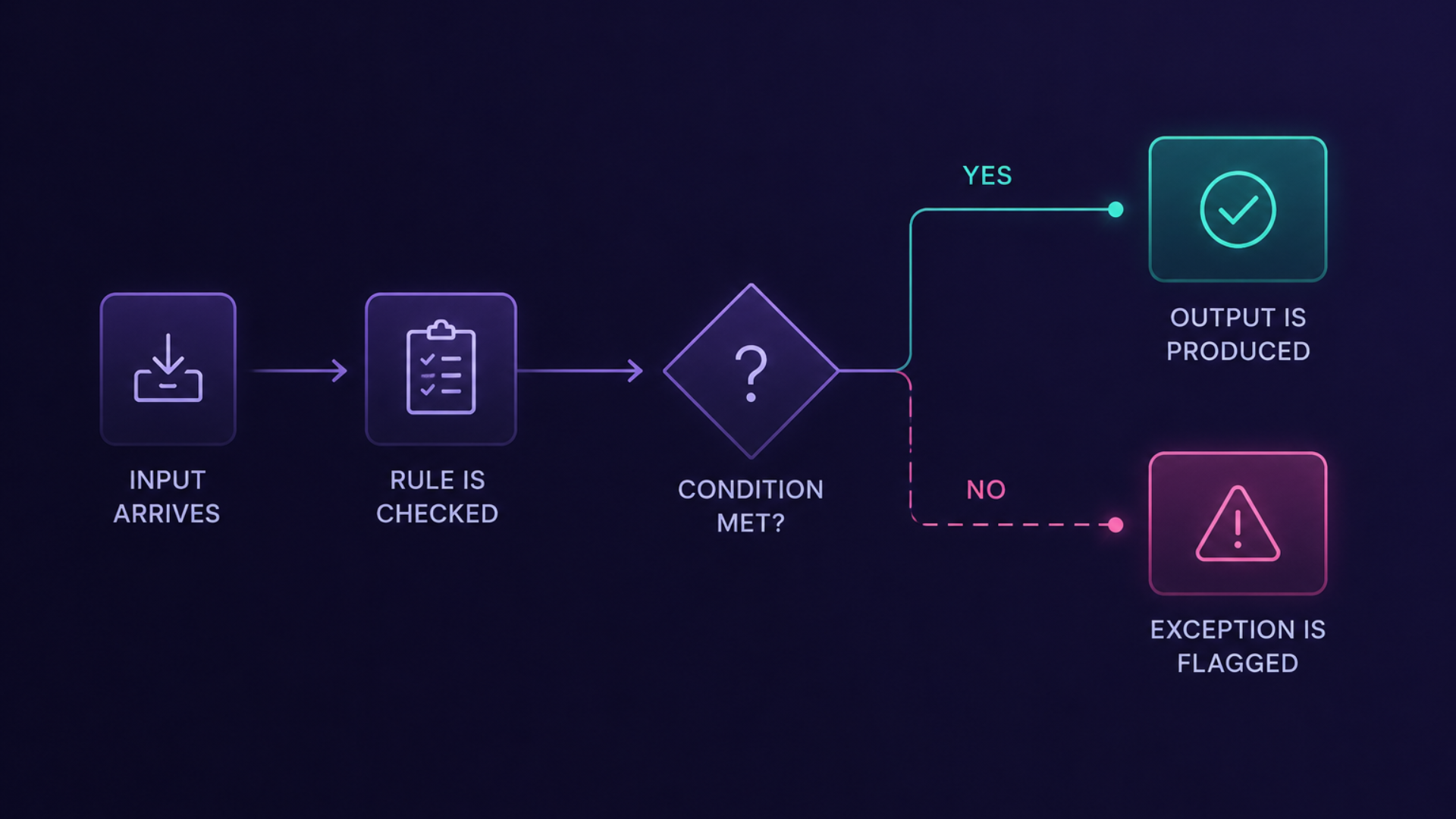
Traditional automation, whether robotic process automation, workflow automation, or rules-based processing, works by following instructions. You define the inputs, the conditions, the steps, and the outputs. The system executes those instructions reliably, repeatedly, and at scale.
This is genuinely powerful for the right kind of problem. A rule that says "if an invoice matches a purchase order and is below a certain value, approve it automatically" can process thousands of invoices a day without a human touching them. The rule does not get tired, forget a step, or make an approval by mistake on a Friday afternoon.
The constraint is that the rule only handles the situation it was written for. The moment an invoice arrives with a field populated in an unexpected format, or a vendor submits under a slightly different name than the one in the system, or an approval threshold needs to change mid-month because of a budget revision, the automation either fails, flags the exception for human review, or worse, processes it incorrectly.
Traditional automation is only as good as the completeness of the rules you write for it. In a stable, well-defined environment with high-volume repetitive transactions, that is often entirely sufficient. In an environment where edge cases are common and situations evolve faster than rules can be updated, it breaks constantly.
What Agentic AI Actually Is
An AI agent does not follow a predefined sequence of steps. It receives a goal or a trigger, reasons through the situation using a large language model, retrieves relevant context from connected systems, decides what to do, and acts.
The analogy that makes this concrete: traditional automation is a vending machine. You press a button, a predefined item comes out. The same input always produces the same output. Agentic AI is closer to a skilled employee. You give them an objective, they figure out how to achieve it, and they adjust their approach based on what they find along the way.
A procurement agent monitoring supplier performance does not have a fixed rule that says "if on-time delivery drops below 85% for three consecutive months, send an alert." It monitors delivery data continuously, detects the trend, retrieves the supplier contract to check the SLA terms, checks whether alternative suppliers are pre-approved, models the margin impact of switching, and surfaces a recommendation with the relevant context attached, all before anyone has manually reviewed a report.
The agent is not following a script. It is reasoning toward an outcome.
Where Each Model Breaks Down
Understanding the failure modes of each model is more useful than understanding the ideal use cases, because failure modes are what enterprise leaders actually encounter.
Traditional automation breaks when the real world diverges from the rules. A process that works perfectly for 90% of transactions often generates a constant stream of exceptions for the remaining 10%, all of which require human intervention. As the volume of those exceptions grows, the automation that was supposed to reduce human effort ends up creating a parallel queue of exception management that absorbs as much time as the original manual process did.
Agentic AI breaks when it operates without sufficient context or guardrails. An agent that does not have access to the business rules, approval thresholds, and compliance constraints that define how the enterprise actually operates will reason toward technically correct but operationally wrong decisions. The enterprise context layer that carries business rules into every agent interaction is what separates agentic AI that performs reliably in production from agentic AI that performs impressively in a demo.
Why This Distinction Matters for Enterprise Operations
The practical implication of this difference shows up most clearly in three situations that every large enterprise encounters regularly.
High-volume, well-defined transactions:
If the process is stable, the rules are clear, and the exception rate is low, traditional automation is often the right choice. It is cheaper to operate, easier to audit, and more predictable in behaviour. Using agentic AI here adds cost and complexity without adding proportionate value.
Complex, multi-step workflows with variable inputs:
If the process involves retrieving information from multiple systems, making a judgment call based on context that changes from case to case, and triggering actions across different platforms, agentic AI handles this in a way that traditional automation fundamentally cannot. Supply chain disruption management, dynamic pricing decisions in dealer networks, and field service scheduling across hundreds of technicians all fall into this category.
Exception handling for automated processes:
One of the most valuable applications of agentic AI is not replacing automation but handling the exceptions that automation cannot. The rules-based system processes 90% of transactions automatically. The agent handles the 10% that fall outside the rules, reasoning through each one rather than flagging it for a human. The combination is more powerful than either model alone.
The Spectrum, Not the Binary
The framing of agentic AI versus traditional automation implies a choice between two mutually exclusive approaches. In practice, enterprise AI architectures almost always combine both, with each handling the work it is best suited for.
A well-designed enterprise AI system in automotive or FMEG typically uses rules-based automation for high-volume, predictable transactions, agentic AI for complex decisions and exception handling, and human oversight for the subset of decisions that require judgment the system is not configured to make autonomously.
The question is not which model to adopt. It is which model to apply to which part of the workflow, and whether the architecture connecting them is governed and integrated well enough to work reliably in production.
What This Means If You Are Evaluating AI for Your Operations
Two questions cut through most of the confusion in this space.
Is the process you are trying to automate stable or variable?
If the inputs, rules, and outputs are well-defined and unlikely to change frequently, start with traditional automation. If the situation requires judgment, context retrieval, or multi-step reasoning across different systems, agentic AI is the appropriate tool.
What is the cost of an error?
Traditional automation errors are typically predictable and auditable. Agentic AI errors are less predictable and require governance built into the architecture from the start. The higher the cost of a wrong decision, the more important it is to have the context layer and guardrails in place before deployment, not after.
Traditional automation and agentic AI are complementary tools, not competing philosophies. The enterprises getting the most from AI in 2026 are the ones that have placed each model where it belongs, rules-based automation for stable, high-volume processes and agentic AI for complex, variable workflows that require reasoning rather than just execution.
The starting point for that decision is understanding what actually separates the two, which is not sophistication or cost, but the fundamental difference between following a predefined sequence and reasoning toward an outcome.
For enterprises building toward production AI deployments across automotive, FMEG, financial services, and industrial manufacturing, that distinction is where every architecture decision starts.
Vishleshan AI's forward deployed engineers help enterprises deploy the right AI model in the right part of their operations, and stay until it is genuinely in production. Book a Consultation